The Easy Half
The pop came in right on schedule. What made Friday historic was never the jump.

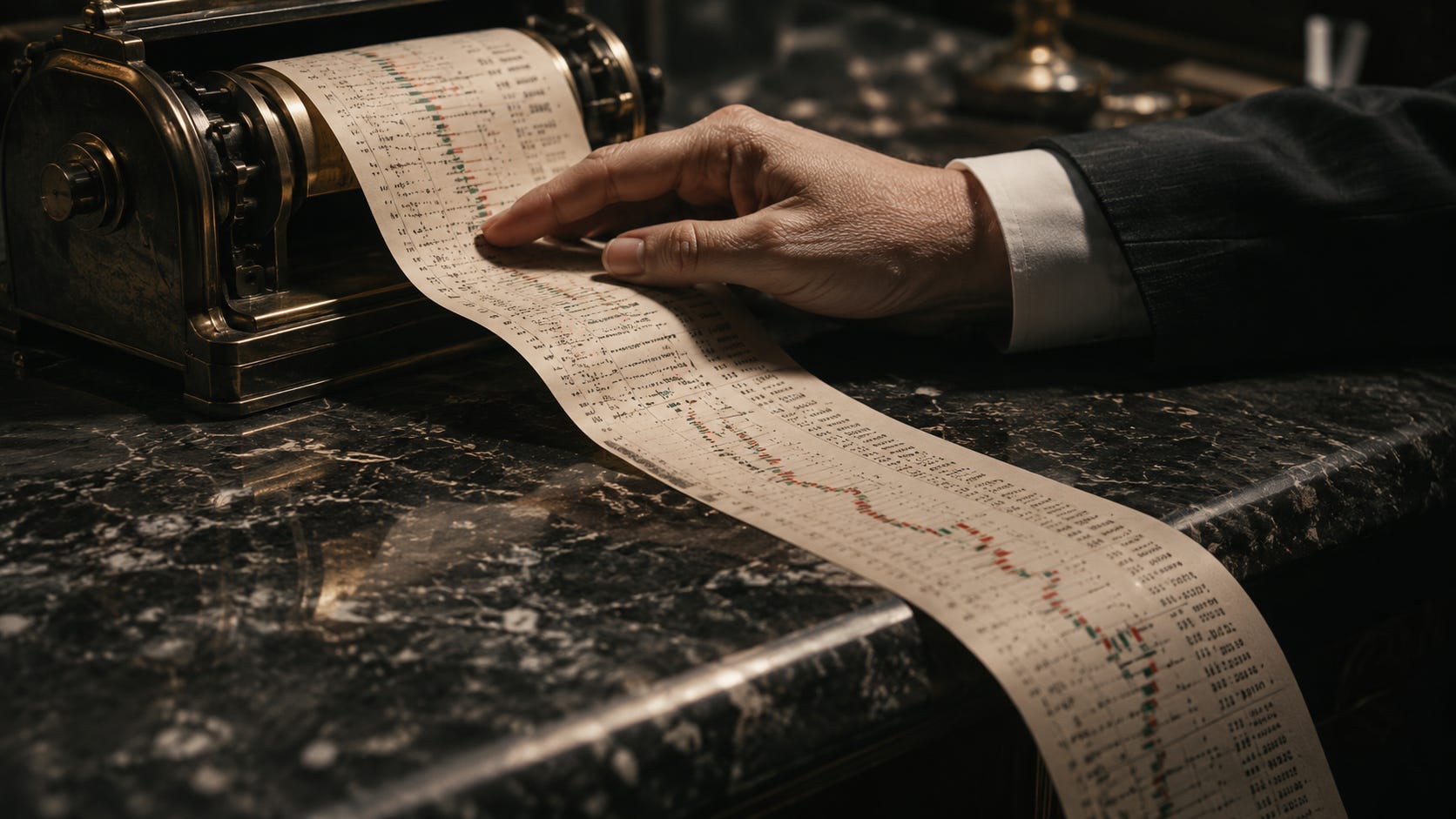
SpaceX priced at $135 a share Thursday night, opened at $150 Friday morning, ran as high as $176.52, and closed at $160.95, up a little over nineteen percent on the day (CNBC). Across forty-five years of American IPOs, the average first-day gain is about nineteen percent (Ritter IPO data). So the pop that filled the headlines was, almost to the decimal, ordinary. The record Friday set was not the jump. It was the size: more than 555 million shares sold, roughly $75 billion raised, a close that valued the company near $2.1 trillion and made Elon Musk, on paper, the world’s first trillionaire. The largest offering in history did the most average thing a hot debut does.
I marked this half on Saturday on purpose, and the call from Wednesday was a modest one by design: SPCX almost certainly opens above $135, because that is what hot debuts do. It opened at $150. The easy half landed exactly where Access to the Exit said it would. Being right about the obvious part is worth saying plainly and then setting down. Anyone could have called the pop. The point was never the direction. It was who collects it.
The fifteen dollars
The $15 between the $135 offer and the $150 open is the whole story in miniature. That gap went to whoever was handed shares at $135 the night before, and that is overwhelmingly the big funds. They could turn around and sell the moment the stock opened. The ordinary buyer who bought when trading went live did not catch that jump; he paid it. Buying “at the open” and buying “at $135” were two different things, and only one of them was ever offered to people like me.
The demand makes the point sharper. By the reporting, something like $350 billion in orders chased the $75 billion of stock actually for sale, and that $75 billion was more than every other 2026 Nasdaq debut combined. Everyone wanted in. Which is exactly why almost no ordinary money got shares at $135: when four or five times more buyers want in than there is stock to go around, the shares go to the biggest, best-connected accounts, not to the line of us waiting on Robinhood. The democratization on offer was the right to buy what the insiders were selling, at the price their selling had already lifted. That is widening-ownership that works as concentration, the sleight of hand Clean Outside the Cup traced.
The honest accounting cuts both ways. Ordinary buyers did not lose money Friday. The stock closed up nineteen percent; anyone who bought at the open is ahead. But the safe slice and the risky slice were handed out unevenly. The insider who got in at $135 could already be out with the gain. The ordinary buyer paid up for a fraction of what he wanted and is holding all of the risk still to come. And anyone who chased that $176 high, the loudest moment of the day, is already down against the close. The gap between those three positions is what the word “access” is built to blur.
The half that is still loaded
The bet that matters was never the open. It is what happens when the insiders are finally allowed to sell.
At a public offering, the people who already own the company, employees, early investors, executives, agree to a lockup: a promise not to sell their shares for a set stretch, here mostly six months, so the new stock is not buried under insider selling on day one. Those held-back shares then come loose in batches on a schedule. The biggest release, the cliff, lands around six months out. There is also an escape hatch: a clause that lets some insiders out early if the stock runs hot enough, in this case if it closes about thirty percent above the $135 offer, above roughly $175.50, for five days out of ten. It touched $176 for a moment Friday and closed at $161, so that early door is, for now, shut.
Here is why any of that moves the price. When more shares are free to sell, there are more sellers chasing the same buyers, and these sellers bought in years ago for pennies on today’s dollar, so they have every reason to cash out. More stock for sale, sellers eager to sell, and the price tends to sag. It usually does: around 60 percent of newly public companies are trading lower around the time their insiders are first allowed to sell. Two dates to hold this piece to. Around September 10, day ninety, the first small batches come free while the excitement of the debut wears off. Around December 9, day 180, the big release hits. That is the stretch I said to watch, and the score on it is not in.
These are averages, not prophecy. A giant, familiar company tends to come through this stretch better than the typical small newcomer, and SpaceX is as familiar as they come. My bolder line from Wednesday, that I would be surprised to see it above the offer price in ninety days, leans less on the selling schedule than on the price itself: a cautious research firm like Morningstar pegs what the company is really worth at around $780 billion, against the roughly $2 trillion Friday put on it. That is a guess, and guesses are wrong all the time. The trend points to the price drifting back down from the $161 close toward the offer; whether it slips under $135 is the valuation argument, not the selling schedule, and I will let it play out.
Never one stock
None of this is really about one stock. SpaceX is no longer the rocket company you picture; the filing now wraps in a frontier AI lab, a chatbot, and a social network, and the day it went public it started behaving like the landlord of the whole AI build-out. Anthropic and Google are paying SpaceX about $2.17 billion a month for computing power, roughly $26 billion a year, to a single supplier. About two months before it went public, the company had already lined up a $60 billion deal for the right to buy the AI coding company Cursor outright, reaching for the most profitable corner of software before its rivals could.
The same playbook is loading into the chamber behind it. Anthropic filed its paperwork quietly this month; OpenAI’s surfaced days later. Insiders make their fortune in private, and the rest of us are invited once the stock goes public and the price is at its highest. That is the model now, not a one-off, and it is the same ownership-of-the-future question underneath You’ll Own Nothing: who gets to hold the thing before it is finished being built.
The door that made Friday’s winners is still the one most people cannot reach. The wealth was built over thirteen private years by the small circle the law let in; the only way around the wealth test is a workaround that asks you to join the financial industry to use it; the clean fix, H.R. 3394, passed the House 397 to 12 and has sat in a Senate committee for a year. Access to the Exit made that case in full, and Friday only added the proof. What the gate protected was not the small investor. It was the order of the line.
The discipline held
I did not buy on Friday. I said I would wait, and I waited, watched it open high, spike higher, and settle back, and none of it changed the math that made waiting the right call. A prudent man foresees evil and hides himself, but the simple pass on and are punished (Proverbs 22:3). The caution the rule assumed I lacked is the same caution that keeps a person from chasing a loud price. I will look again in September, when the first insider shares are freed to sell, and decide whether the company I have admired for thirteen years is worth owning at a price that makes sense.
A debut sold as access that paid its architects first and its arrivals last is the system telling you what it thinks you are for. Friday was the easy half, and it came in on cue. The loaded half runs from here to December. I will come back with the receipt for that one too.
Sources
CNBC, “SpaceX IPO takeaways: SPCX closes at $161, jumping 19% after record debut,” 2026-06-12, https://www.cnbc.com/2026/06/12/spacex-ipo-spcx-live-updates.html
NPR, “SpaceX IPO makes history as largest ever. Stock gains 19% on first day,” 2026-06-12, https://www.npr.org/2026/06/12/nx-s1-5855004/stock-ai-spacex-ipo-elon-musk
CBS News, “SpaceX stock soars 19% on first day of trading following record-breaking $75 billion IPO,” 2026-06-12, https://www.cbsnews.com/news/spacex-stock-price-ipo-spcx-initial-public-offering/
unusual_whales (@unusual_whales), SpaceX IPO: $75B raised, $2T+ market cap, ~$350B in total demand, more than all other 2026 Nasdaq IPOs combined; Musk becomes the world’s first trillionaire,

Jay R. Ritter, “Initial Public Offerings: Updated Statistics,” University of Florida (IPO Data), https://site.warrington.ufl.edu/ritter/ipo-data/
SpaceX (Space Exploration Technologies Corp.), Form S-1/A registration statement (lockup terms and 30% early-release price trigger), filed 2026-06-03, U.S. Securities and Exchange Commission, https://www.sec.gov/Archives/edgar/data/1181412/000162828026040364/spaceexplorationtechnologib.htm
Morrison Foerster (Free Writings & Perspectives), “IPO Lockups and Stock Price Declines,” https://www.freewritings.law/2018/07/ipo-lockups-stock-price-declines/
Morningstar, “SpaceX: What Investors Need to Know About Its Enormous Upcoming IPO,” https://www.morningstar.com/stocks/spacex-what-investors-need-know-about-its-enormous-upcoming-ipo
Chamath Palihapitiya (@chamath), Anthropic and Google paying SpaceX $2.17B/month for compute (~$26B a year),


Yahoo Finance / Fortune, “SpaceX strikes $60 billion deal for the right to buy AI coding startup Cursor” (option struck April 2026, exercisable through end of 2026; not yet exercised), https://finance.yahoo.com/markets/article/spacex-strikes-60-billion-deal-for-the-right-to-buy-ai-coding-startup-cursor-143350832.html
H.R. 3394, Fair Investment Opportunities for Professional Experts Act, 119th Congress (passed House 397-12, June 23, 2025; referred to Senate Committee on Banking, Housing, and Urban Affairs), https://www.congress.gov/bill/119th-congress/house-bill/3394
The Holy Bible, New King James Version. Proverbs 22:3.
Miles DeBenedictis, Access to the Exit, https://pastormiles.substack.com/p/access-to-the-exit
Miles DeBenedictis, Clean Outside the Cup, https://pastormiles.substack.com/p/clean-outside-the-cup
Miles DeBenedictis, You’ll Own Nothing, https://pastormiles.substack.com/p/youll-own-nothing
This article was developed using AI writing tools I built to work with my voice, research, and editorial framework. The ideas, arguments, and positions are mine. The pipeline that helps me draft, evaluate, and refine them is something I created as part of my work at Nomion AI. I believe in building with AI and being honest about it. If you want to know more about that process, ask me.